The best things to do in Exmoor National Park
The UK is home to no less than 15 National Parks. Not a bad number considering our island’s tiny size. Exmoor, found in the South West of England, was designated a National Park all the way back in 1954 but remains one of the quieter and less explored parks.
Don’t let that put you off though – there is plenty to see and do here, and despite visiting several times ourselves, it still feels like we have a lot of exploring left to do!
Below are our favourite villages, walks, scenic spots and of course pubs that you can use as a guide to this stunning area.

How to get there
Exmoor National Park straddles the border between Somerset and North Devon, and is best accessed by car. Roads are winding and pretty but easy to navigate, and parking is fairly priced and simple to find in most places. If you’d rather leave your car at home you can also get around by bus – the Exmoor Explorer route from Minehead to Lynton is particularly scenic, with open top buses and ocean views.
Things to see and do
LYNTON/LYNMOUTH
Probably the most popular and well known spot in all of Exmoor (and for good reason) Lynton and Lynmouth are twin villages separated by a 700ft gorge, and connected by the Lynton and Lynmouth cliff railway. The funicular has been running people and goods between the villages since 1890, and is actually the steepest water-powered railway in the world. With it’s scenic terrace overlooking the sea and the village below, it’s definitely worth the small fee to ride it. Another tourist attraction worth visiting is the Glen Lyn Gorge – there’s a tiny museum detailing the history of the area (including the catastrophic flood of 1952) and an opportunity to learn about hydroelectricity. Aside from that though the walk through the gorge, following the river to the waterfalls, is just lovely.
Even if you don’t want to pay for anything, Lynmouth is still worth a visit. The village houses are very picturesque and the harbour is a nice place to sit and watch the world go by. Plus it’s home to the wonderful Ancient Mariner pub (keep an eye out for the incredible octopus sculpture within!)

VALLEY OF ROCKS
One of the most dramatic coastal landscapes in Britain, the epically named Valley of Rocks is just a short drive – or slightly longer hike – from Lynton. Giant prehistoric rock formations jut out of the valley mouth and make for a photographer’s paradise, while cute mountain goats keep hikers company on the cliff footpaths. It’s a great place to watch a sunset.

WATERSMEET
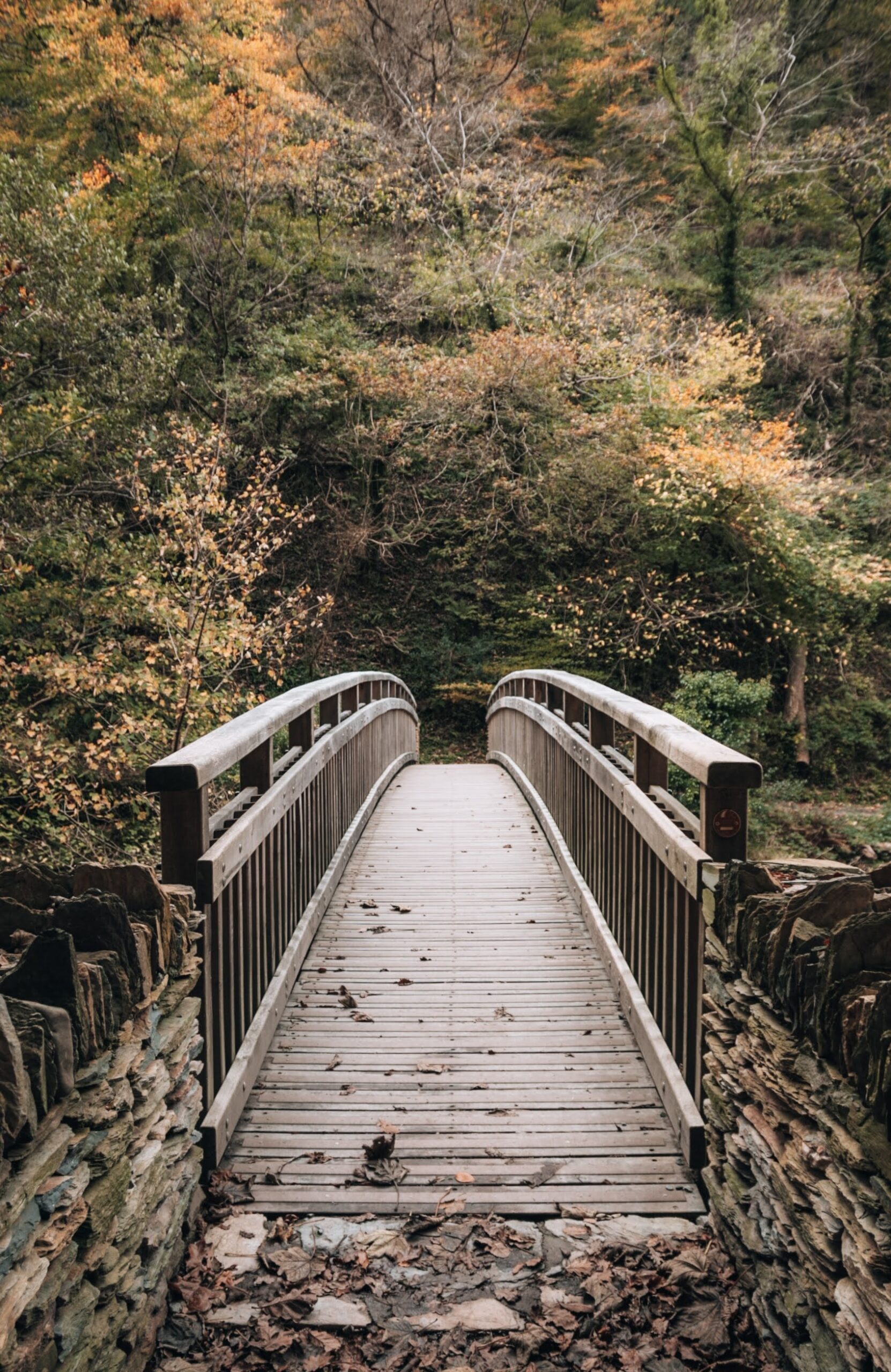
Another walk from Lynmouth, this is a significantly gentler affair, although still picturesque. Following the East Lyn river the entire way, my favourite time of year to do this walk is in the Autumn, when all the trees have turned red and gold. At the end of this trail is the National Trust tea room of Watersmeet (so called as the East Lyn River meets Hoar Oak water here) a very pretty spot to have a cup of tea and slice of cake before heading back.
BROADSANDS BEACH
Often cited as one of the best hidden beaches in the UK, Broadsands is difficult to access (some 250 very steep steps) but all the more rewarding for it. When the sun is shining and the tide is out (I recommend checking tide times before arriving!) this could be a beach in Thailand. There is also something quite prehistoric about it and it always reminds me of Jurassic Park. If you can’t brave the long walk down and back up, you’ll still be able to enjoy a cracking view from the top of the cliff.
PORLOCK/PORLOCK WEIR
Another lovely ‘set’ of villages, Porlock and Porlock Weir are both great places to stop for lunch and a wander. Porlock has a charming little high street filled with local shops and a few pubs and cafes (we recommend The Ship Inn), as well as the Church of St Dubricius, which has an unusual spire and a 1000 year old Yew tree in its churchyard.
Further up the coast you’ll find Porlock Weir, which has a pebble beach for the dog to run riot (although it’s a bit difficult to walk on!) and some pretty cottages to photograph. We stopped for a pint at The Ship Inn – sister pub to the Ship Inn Porlock – and had a lovely chat with some locals. If you fancy a longer walk, you can follow the coast path to St Bueno’s, the smallest parish church in England.


DUNSTER
Quaint Dunster is a historical town worth visiting, either just for food and drinks in one of its many pubs (we recommend The Luttrell Arms which feels like stepping back in time) or to explore its ancient streets and Norman castle. The Castle sits at the top of a wooded hill, so is blessed with some great views, and also has a subtropical garden and a working watermill. However if you don’t fancy the walk up the hill you can still marvel at it from a distance, and enjoy the thatched cottages and timber buildings of the village instead.

TARR STEPS
I love a mystery, and the Tarr Steps – the clapper bridge that crosses the River Barle – has one connected to it. No one knows when it was built, and legend says it was the Devil himself who built it, and even to this day no one can cross if he decides to sunbathe on the warm slabs. Whatever the real story, it’s a very cool spot, and on a summer’s day is full of children and dogs splashing around in the shallow waters. We visited very early in the morning though and had the place completely to ourselves. The loop route is around 2km long, and if you’re lucky (and quiet!) you may spot some otters fishing along its banks.
HUNTER’S INN/HEDDON’S MOUTH
Heddon valley was reportedly a favourite spot of the Romantic Poets, including Wordsworth, and you can see why. The lush wooded river valley leads you to the coast and Hendon’s Mouth beach, or you can keep exploring further towards the more secluded Woody Bay. After (or before) your walk you can stop at The Hunters Inn, for a drink or a meal. It has a huge garden which apparently has peacocks roaming around, although we didn’t see any when we visited! To book your table visit their website.

DUNKERY BEACON
Coming to Exmoor you probably should take at least one walk across the moors, and this is a gentle but rewarding option. There are several routes you can take but I recommend parking on the Wheddon Cross side, and taking one of the paths directly from the car park up to the Beacon. The views are great on a clear day, and if it’s not too windy it’s a good spot to stop for a quick sandwich before heading back down.

I hope you find something here which inspires you to visit Exmoor. For more UK travel content, including other National Parks, see these blog posts.


